
Hideaway Couch: The Complete Guide to Smart Space-Saving Seating
Discover how a hideaway couch transforms compact living rooms, guest spaces, and studio apartments into flexible, functional zones. Learn the mechanisms, materials, and features that matter before you decide.
Explore Hideaway OptionsWhy a hideaway couch deserves a second look: A hideaway couch is more than a sofa with a trick up its sleeve. It is a space-planning tool that lets a single room serve as a living area by day and a guest bedroom by night. For anyone researching furniture for a smaller home, this guide breaks down what separates a well-engineered hideaway couch from a basic convertible sofa, so you can choose with confidence.
What Exactly Is a Hideaway Couch?
A hideaway couch is a multi-functional sofa with concealed components that transform its shape or purpose. Unlike a standard pull-out couch that simply extends a mattress, a hideaway couch often combines two or more space-saving tricks: a pop-up backrest, a fold-away seat, hidden storage, or a compact sleeping surface that tucks back into the frame. The result is furniture that behaves like a conventional sofa during the day but adapts quickly when guests arrive or when the room needs to switch functions.
The term is sometimes used interchangeably with convertible sofa, sofa bed, or sleeper couch, but the defining feature is concealment. The transformation mechanism is designed to stay out of sight and out of the way until needed. That makes a hideaway couch especially relevant for studio apartments, guest rooms, home offices, and any living space where every square foot has to earn its place.
How Hideaway Couch Mechanisms Work
The mechanism is the heart of any hideaway couch. It determines how easy the conversion feels, how often you can use it, and how much clearance the sofa needs. Most models fall into one of several broad categories:
Pull-Out Mechanism
A mattress or platform slides outward from beneath the seat. Common in entry-level and mid-range hideaway couches, this design is straightforward and easy to operate but requires clear floor space in front of the sofa.
Fold-Out Mechanism
The seat flips forward and the backrest folds down to create a flat sleeping surface. Fold-out hideaway couches are compact when closed and often lighter than pull-out models, though mattress thickness tends to be limited.
Pop-Up Backrest
The backrest lifts and the seat extends to form a longer sleeping area. This design is popular in premium hideaway couches because it preserves a clean sofa silhouette when closed and offers better support when open.
Hidden Storage Compartment
Some hideaway couches include a lift-up seat or a pull-out drawer for bedding, pillows, or living room essentials. Storage-integrated models are especially useful in small spaces where clutter control matters.
Each mechanism has trade-offs. Pull-out systems tend to offer thicker mattresses and more robust support, while fold-out and pop-up designs are often more compact and easier to reposition. Mid-range hideaway couches usually improve on entry-level models with smoother glides, reinforced frames, and better cushioning. Premium and luxury tiers add features like pocket-coil mattresses, hidden storage, and upholstery with performance finishes.
Key Features to Compare Before You Choose
Two hideaway couches can look similar in a showroom yet perform very differently over time. The following features are the ones that separate a solid long-term investment from a short-lived compromise.
Frame and Mechanism Quality
Look for a frame made from kiln-dried hardwood or high-grade steel. Entry-level hideaway couches often use engineered wood or lighter metal frames, which may be fine for occasional use but can loosen with frequent conversion. Mid-range models typically add reinforced joints and smoother mechanism glides. Top-tier and professional-grade hideaway couches use heavy-duty steel mechanisms tested for repeated cycles, which matters if the couch will serve as a daily sleeper.
Mattress and Cushion Support
The sleeping surface is where many hideaway couches reveal their tier. Entry-level models often use a thin foam mattress that is acceptable for occasional guests. Mid-range hideaway couches improve comfort with denser foam or a foam-and-fiber blend. Premium and luxury hideaway couches frequently feature pocket-coil or hybrid mattresses that reduce motion transfer and provide better spinal support. If the couch will be used for regular overnight sleeping, prioritize the mattress specification over decorative details.
Clearance and Footprint
A hideaway couch needs room to transform. Measure the closed footprint and the fully extended depth, then confirm that the room can accommodate both. Pull-out models generally require more front clearance than fold-out or pop-up designs. If the room is tight, a small-space couch bed with a fold-out mechanism may be more practical than a full pull-out sofa. Our measurement tips can help you plan the layout before delivery day.
Upholstery and Maintenance
Hideaway couches are handled more often than standard sofas because the mechanism requires regular movement. Choose upholstery that suits the household. Performance fabrics resist spills and stains, while leather and faux leather are easier to wipe clean. If the couch will sit near a window, consider a fabric protector with UV resistance, such as a fabric and UV protector, to slow fading. Regular care extends the life of any upholstery, and our upholstery care guide covers the basics.
Style and Room Integration
A hideaway couch should look like a deliberate design choice, not a compromise. Modern hideaway couches come in clean-lined silhouettes that fit contemporary living rooms, while tighter upholstery and tailored cushions suit more traditional spaces. If the room leans toward leather, browse leather living room ideas for a cohesive look. For softer, family-friendly spaces, fabric options pair well with throw blankets and layered textiles.
Hideaway Couch Tiers at a Glance
The table below uses universal quality descriptors to compare hideaway couch tiers without referencing numeric figures. Use it as a framework for evaluating models across retailers.
| Tier | Best For | Mechanism | Mattress & Support | Durability Outlook |
|---|---|---|---|---|
| Entry-level | Occasional guests, light daily seating | Simple pull-out or fold-out frame | Thin foam, basic support | Solid for infrequent conversion |
| Mid-range | Regular guest use, multi-purpose rooms | Reinforced steel glides, smoother operation | Denser foam or foam-fiber blend | Durable construction for routine use |
| Premium | Frequent sleeping, primary living space | Pop-up backrest or heavy-duty pull-out | Pocket-coil or hybrid mattress | Long-term investment with reinforced joints |
| Luxury | Daily sleeper, design-focused homes | Precision-engineered multi-position system | High-density foam with pocket-coil support | Professional-grade mechanism and premium materials |
As a general rule, mid-range hideaway couches offer a meaningful step up in mechanism smoothness and cushion support compared with entry-level models. Premium and luxury tiers are worthwhile when the couch will be converted often or used as a primary sleeping surface. The right choice depends on how the room will actually be used, not on the label alone.
Planning a Room Around a Hideaway Couch
A hideaway couch works best when the surrounding layout supports both of its functions. Start with the conversion path: the area the mechanism needs to extend and the walking space guests will use when the bed is open. Keep that zone free of behind-couch tables, floor lamps, and other obstacles that would need to move each time the couch converts.
For daytime use, anchor the seating area with a rug, a slim side table, and layered lighting. A storage ottoman can hold extra bedding without adding visual clutter, and a floor lamp provides softer light for evening conversations. If the room doubles as a home office, consider a laptop couch desk that can be tucked away when the couch is in sleep mode. These small choices keep the room feeling intentional rather than transitional.
In open-plan spaces, use the back of the hideaway couch to define zones. A low console or a narrow behind-the-couch table can separate the living area from a dining or work zone without blocking sightlines. Just confirm that the table does not interfere with the mechanism's extension path.
Who Should Consider a Hideaway Couch?
A hideaway couch is a strong fit for several specific situations:
- Studio and small apartment residents who need one room to serve as living space, office, and occasional guest bedroom.
- Households that host overnight guests regularly but do not have a dedicated guest room.
- Homeowners furnishing a multipurpose room such as a den, basement, or home office that occasionally becomes a sleeping space.
- Renters who want flexible furniture that can adapt to different floor plans without requiring a second bed.
- Families with older children or teens who want a hangout space that converts for sleepovers.
A hideaway couch is less suitable for buyers who need a permanent, hotel-quality bed every night or who have very limited clearance in front of the sofa. In those cases, a dedicated comfortable couch to sleep on or a traditional bed may be the better long-term choice.
Common Mistakes to Avoid
Buyers researching a hideaway couch often focus on the look and overlook the practical details. The most common pitfalls include:
- Skipping the clearance check. A couch that cannot fully extend is effectively a standard sofa with unused hardware. Measure the room and the conversion path before ordering.
- Underestimating mechanism quality. A stiff or noisy mechanism quickly becomes a reason to avoid converting the couch. Test the mechanism in person if possible, or read detailed owner feedback.
- Choosing upholstery that does not match the household. Light fabrics in high-traffic rooms require more maintenance. Performance fabrics and leather are more forgiving.
- Ignoring mattress thickness. A thin mattress may be fine for a single guest night but uncomfortable for extended stays. Match the mattress specification to how often the bed will be used.
- Forgetting storage. In small rooms, bedding has to live somewhere. A storage-integrated hideaway couch or a nearby storage ottoman solves this without adding furniture.
Recommended Hideaway Couches & Space-Saving Sofas
⚠️ AFFILIATE DISCLOSURE: This website contains affiliate links. As an affiliate Associate, we earn from qualifying purchases. If you make a purchase through these links, we may receive a small commission at no additional cost to you. Read our full affiliate policy.

Gizoon 63.6" Convertible Sofa Bed, 3-in-1 Couch Bed, Small Sleeper Sofa | Futon, Sleeper Sofa Bed for Small Spaces Apartment Living Room, Side Pockets, Storage Armrests, 5 Adjustable Backrest, Grey
Check price on Amazon
Ahomly 77.2'' Extended Pull Out Sofa Bed, 3-in-1 Sleeper Couch, Dark Gray | Corduroy Convertible Sofa with Space-saving for Apartment, Studio, Loveseat Sleeper Sofa with Side Pockets
Check price on Amazon
Dreamzie 65'' Convertible Sleeper Sofa Bed with Swivel Side Table, Chenille Pull Out Couch for Living Room, Loveseat Sleeper Couch with Hidden Storage Space | Charging Port | Cup Holders, Grey
Check price on Amazon
Sofa Bed Pull Out 2 in 1 Sectional Sleeper Sofa L Shaped Couch with Storage | Convertible Sofa Couches for Living Room, USB Charging Ports, Cup Holder (Dark Gray)
Check price on Amazon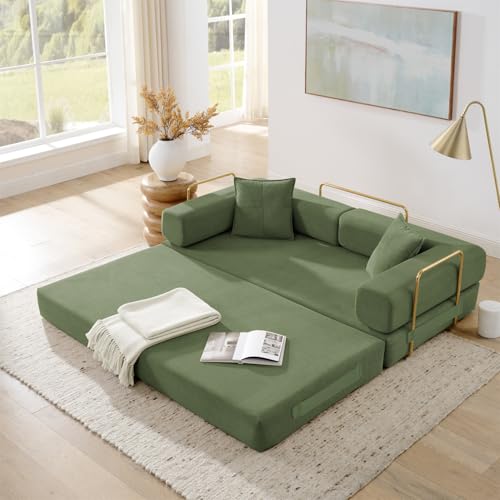
4-in-1 Folding Convertible Sofa Bed, 78 Inch Oversized Corduroy Upholstered Boneless Couch, Loveseat Sleeper with Pull Out Bed, Floor Sofa Modular Futon Couch for Living Room Bedroom Lounge, Green
Check price on Amazon
CUBENTE 78.8" Convertible Futon Sofa Bed, Boneless Couch for Living Room | Corduroy Boneless Loveseat Sleeper Sofa, Modular Futon Couch with Storage Pocket, Pull Out Couch No Assembly | Green
Check price on Amazon
108'' Modular Sectional Sleeper Sofa Couches for Living Room, Dark Grey | L/U Shaped Sleeper Sofa, Pull Out Couch Bed, Hidden Storage, Modular Design, Comfy Corduroy, Removable Cover, Movable Ottoman
Check price on Amazon
MEGAYES Folding Sofa Bed Convertible 4 in 1 Sleeper Chair Beige Twin | Pocket Coils+Foam Fill Medium Support, Boneless Floor Couch Foldable Chaise Lounger Portable Futon for Living Room Bedroom
Check price on AmazonFrequently Asked Questions About Hideaway Couches
What is the difference between a hideaway couch and a regular sofa bed?
A regular sofa bed typically refers to a couch with a pull-out mattress mechanism. A hideaway couch is a broader category that includes pull-out models but also covers fold-out, pop-up backrest, and storage-integrated designs. The common thread is concealment: the conversion hardware stays hidden until needed, and the couch retains a clean sofa silhouette when closed.
Can a hideaway couch be used as a daily sleeper?
Yes, but tier matters. Premium and luxury hideaway couches with pocket-coil mattresses and heavy-duty mechanisms are designed for frequent conversion and regular overnight use. Entry-level models are better suited to occasional guests. If daily sleeping is the plan, prioritize the mattress specification and mechanism rating over decorative details.
How much space does a hideaway couch need to open?
Clearance requirements vary by mechanism. Pull-out models generally need the most front clearance, while fold-out and pop-up designs are more compact. Measure the fully extended depth and add walking space before committing. Our measurement tips walk through the process step by step.
Are hideaway couches comfortable for everyday sitting?
Comfort depends on cushion construction and frame support. Mid-range and premium hideaway couches typically use denser foam and better suspension than entry-level models, making them comfortable for daily seating. Test the seat depth and back height in person if possible, or check owner reviews that mention long-term comfort.
What upholstery works best for a hideaway couch?
Performance fabrics, leather, and tightly woven textiles are practical choices because they resist wear and clean easily. If the couch sits near a window, consider a UV-resistant protector. For households with pets or children, a couch protection cover can extend the life of the upholstery between deeper cleanings.
Where should I shop for a hideaway couch?
Both online and in-store shopping have advantages. In-store visits let you test the mechanism and sit on the cushions, while online retailers often offer a wider range of sizes and upholstery options. Our guide to online stores covers what to check before ordering, and our warranty and returns overview explains the coverage to look for.
Ready to Choose Your Hideaway Couch?
Start with the room, not the product. Measure the conversion path, decide how often the couch will become a bed, and match the mechanism and mattress tier to that routine. When those three pieces line up, a hideaway couch becomes one of the most practical pieces of furniture in the home.
Compare Hideaway Couch FeaturesContinue Your Research
Explore related guides to round out your planning:
- Small sectional with pull-out bed — a compact alternative for living rooms that need extra seating.
- Couches with a pull-out bed — compare pull-out mechanisms across styles.
- Sectional with storage and sleeper — combine seating, storage, and sleeping in one piece.
- Apartment sofa — scale-appropriate seating for smaller floor plans.
- Couch with ottoman — extend comfort and functionality without a second piece.
- Behind-the-couch shelf — add storage and display space without blocking the conversion path.