
I Want to Reupholster My Couch
Everything you need to know before you commit: how reupholstery works, which fabrics survive daily life, what the process involves, and how to decide between restoring your current couch and replacing it.
Start the GuideWhy reupholstery makes sense: A couch is mostly frame, springs, and foam — the fabric is the thinnest layer. When the structure is still sound, replacing the cover restores comfort and appearance while keeping a piece that has already proven its durability. This guide walks you through the decision, the materials, the workflow, and the practical questions to ask before you begin.
Is Reupholstery Right for Your Couch?
The first question isn't about fabric — it's about the frame. Sit on the couch and listen. A quiet, solid feel with no wobble or sag suggests a frame worth preserving. Run your hand along the deck under the cushions: if you feel a rigid hardwood or engineered frame rather than flexing particleboard, the piece has structural value. Check the suspension by pressing into the seat; uniform resistance means springs or webbing are still doing their job. If the cushions are the only weak point, explore reupholstering couch cushions alone, which is a smaller project than a full rebuild.
Reupholstery is also a reasonable path when the couch fits your room perfectly, matches a hard-to-replace set, or carries sentimental weight. Conversely, if the frame creaks, the legs are cracked, or the suspension has collapsed, the labor invested in new fabric may outlast the structure beneath it. In those cases, comparing the project against the broader average outlay to reupholster a couch and the typical outlay of a new couch gives you a clearer frame of reference.
Fabric condition matters too. Fading, pilling, and surface wear are cosmetic and reversible through reupholstery. Deep tears along seams, pet damage that has reached the foam, or odor trapped in the filling often call for replacing the cushion cores as well — a detail covered in our guide to memory foam replacement couch cushions.
Pros and Cons of Reupholstering
Why It Works
- Keeps a proven frame that has already survived years of daily use.
- Allows a complete style reset — color, texture, and pattern — without changing the footprint.
- Supports sustainability by extending the life of existing furniture.
- Often preserves a custom fit or a discontinued silhouette.
- Can upgrade comfort with new foam or added padding during the rebuild.
What to Weigh
- Labor is the dominant part of the project; complex shapes take longer.
- Fabric lead times can stretch the schedule by weeks.
- Not every couch is worth the effort if the frame or springs are failing.
- DIY reupholstery demands patience, tools, and a clean workspace.
- Pattern matching on large pieces requires careful yardage planning.
Choosing the Right Reupholstery Fabric
The fabric you choose determines how the couch feels, how it ages, and how much maintenance it needs. Aim for a tight weave with a rub count appropriate to daily use, and confirm the material is rated for upholstery rather than drapery. Households with pets should review options that resist claws and stains, such as the materials in our guide to couch material cats won't scratch and the broader notes on pet-friendly sofas.
| Fabric Type | Tier | Best For | Considerations |
|---|---|---|---|
| Performance weave (solution-dyed) | Premium | Families, pets, high-traffic rooms | Excellent stain resistance; slightly firmer hand |
| Tight-weave linen blend | Mid-range | Living rooms with moderate use | Breathable and textured; prone to creasing |
| Cotton blend | Essential | Casual, everyday seating | Soft and versatile; check rub count carefully |
| Velvet | Premium | Formal or accent seating | Rich depth; requires directional pile handling |
| Leather (top-grain) | Luxury | Long-term durability and patina | Different skill set; review can you reupholster a leather couch |
The Reupholstery Process, Step by Step
Whether you hire a workshop or take it on yourself, the sequence follows the same logic. Understanding it helps you plan yardage, schedule, and expectations — and it makes conversations with a professional far more productive.
- Assess the frame and suspension. Confirm the structure is sound before committing fabric. Replace worn webbing or springs if needed.
- Measure and plan yardage. Measure each panel separately, then add a pattern-repeat allowance. Cushions, arms, and back panels are counted individually.
- Photograph and label. Take close-ups of seams and corners, and label every removed piece in order so the rebuild is straightforward.
- Remove the old cover. Keep the original fabric as a template. Note where staples, tacks, and piping were placed.
- Inspect and refresh the internals. Replace degraded foam, repair sagging springs, and add padding where comfort has flattened.
- Cut and fit the new fabric. Align pattern repeats, match direction of pile, and test-fit before permanent fastening.
- Staple, sew, and finish. Work from the center outward. Add piping, welting, or trim to match the original design.
- Reassemble and inspect. Reattach legs, cushions, and any hardware, then check seams and corners under light.
Our detailed walkthrough on how to reupholster a couch expands each step with tool lists and common pitfalls. If you're still deciding between restoring and replacing, the comparison in repairing a sagging couch with non-removable cushions is a useful companion read.
DIY vs Professional Reupholstery
A simple couch with straight panels, removable cushions, and minimal tufting is achievable for a confident DIYer with basic tools: a staple gun, upholstery shears, a sewing machine, and a clean work area. The learning curve steepens with curves, channel stitching, and attached back cushions. Before starting, weigh your time honestly — a full rebuild often stretches across multiple weekends.
Professional workshops bring pattern-matching experience, industrial sewing equipment, and access to trade fabrics. They also handle hidden frame repairs and foam replacement as part of the job. For complex silhouettes or premium materials, the finished result is usually more precise. Either way, the project is a longer-term investment in a piece you already own, and the durability of the frame is what determines whether that investment pays off.
Pre-Project Checklist
Before you order fabric or book a workshop, run through this short list. It prevents the most common scheduling and fitting problems.
- Confirm the frame, legs, and suspension are structurally sound.
- Measure every panel and add a pattern-repeat allowance.
- Choose a fabric rated for upholstery with an appropriate rub count.
- Decide whether to replace foam cores while the cover is off.
- Photograph the original cover and label each removed piece.
- Set aside a clean, ventilated workspace if going the DIY route.
- Ask a professional about lead times, fabric sourcing, and warranty on labor.
- Compare the project against a replacement to confirm the trade-off.
If you decide replacement is the better path, our guides on buying a new couch and the secondhand market offer practical routes. For smaller touch-ups that don't require a full rebuild, patching a couch and couch repair cover targeted fixes.
Frequently Asked Questions
Is it worth reupholstering a couch?
It's worth it when the frame and suspension are solid and the piece has structural or sentimental value. A well-built frame outlasts its fabric, so replacing the cover restores function and appearance for years to come.
How long does couch reupholstery take?
Professional reupholstery typically takes two to six weeks depending on fabric lead time, frame repairs, and workshop backlog. DIY projects often stretch over several weekends.
What fabric is best for reupholstering a couch?
Performance weaves, tight-weave linen blends, and durable cotton blends balance comfort and longevity. For households with pets or children, stain-resistant performance fabric is the most practical choice.
Can I reupholster a couch myself?
Yes, confident DIYers can reupholster a simple couch with basic tools and patience. Complex curves, tufting, and attached cushions are better handled by a professional.
Recommended Reupholstery Supplies & Couch Tools
⚠️ AFFILIATE DISCLOSURE: This website contains affiliate links. As an affiliate Associate, we earn from qualifying purchases. If you make a purchase through these links, we may receive a small commission at no additional cost to you. Read our full affiliate policy.

Korser 110" L-Shaped Modular Sectional Sofa with Chaise, Boneless Comfy Corduroy Fluffy Couch with Deep Seat and Side Pockets, Flexible Module Combination for Living Room, No Assembly, Side Pockets
Check price on Amazon
108'' Modular Sectional Sleeper Sofa Couches for Living Room, Dark Grey | L/U Shaped Sleeper Sofa, Pull Out Couch Bed, Hidden Storage, Modular Design, Comfy Corduroy, Removable Cover, Movable Ottoman
Check price on Amazon
95" L-Shaped Cloud Sectional Couch, Left Facing Modular Compressed Boneless Sectional Sofa with Chaise Lounge, Plush Corduroy Boneless Corner Sofa for Living Room
Check price on Amazon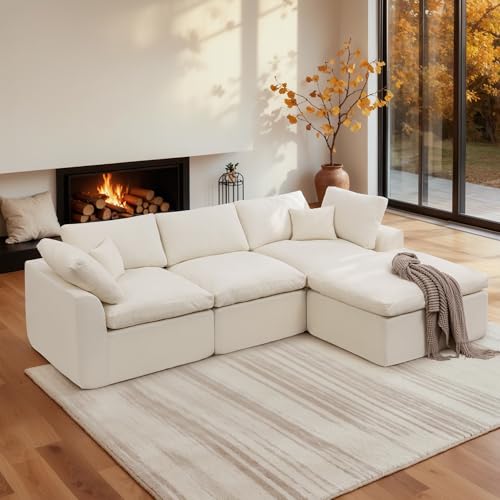
Korser 110" Cloud Sectional Couches for Living Room, Modern Modular Sectional Sofa with Ottoman, Boneless Cloud Couch with Comfy Deep Seats, Fluffy Chenille L-Shape Sofa Couch for Living Room, Beige
Check price on Amazon
Hawarida Modular Sectional Couch for Living Room, U Shaped Comfy Sofa | Comfortable Foam Cushions, Sturdy Frame, Appealing Look, Easy Assembly, Soft Chenille Fabric, Movable Ottoman, Dark Gray
Check price on Amazon
Boneless Couch, Cloud Couch Sofa, Sectional Couches for Living Room | Comfy L-Shaped Modern Sectional Sofa, Upholstered Corduroy Couch with Storage Pocket for Apartment, No Assembly Required
Check price on Amazon
TROMIRY U-Shaped Sectional Couches for Living Room | 112 Inch Modern Sectional Couch | Warm White Chenille Sofa with Double Chaise for Apartment
Check price on Amazon