
Sectional Couch with Built-In Table: The Complete Buyer's Guide
Combine seating and surface area in one smart footprint. Learn how integrated tables work, which configurations suit your room, and what to verify before you buy.
START EXPLORINGWhat Is a Sectional Couch with a Built-In Table?
A sectional couch with a built-in table is a multi-piece seating arrangement that integrates a table surface directly into its structure. Instead of relying on a separate coffee table or side table, the surface is part of the sofa itself — embedded in an armrest, positioned between seats, mounted behind the backrest, or designed as a drop-down tray. The result is a single piece of furniture that serves two daily functions: comfortable seating and a stable place to set down drinks, snacks, remotes, laptops, or a book.
This category has grown because living rooms are increasingly expected to do more. Open floor plans, apartment living, and multipurpose family rooms all reward furniture that earns its footprint twice. A built-in table reduces the number of standalone pieces you need, which can simplify traffic flow and make a room feel more deliberate. For buyers who are still mapping out their space, our living room layout guides explain how seating and surface furniture interact in different room shapes.
It is important to distinguish between the main configurations, because they are not interchangeable. A console table built between two seats behaves very differently from a tray that folds down from the backrest. Before comparing models, understand which format actually fits how you use your living room.
CouchFocus Buying Principle: A built-in table is only an advantage if it matches your daily routine. Decide where you need a surface — beside you, in front of you, or behind you — before you fall in love with a silhouette. The right configuration will feel obvious within a week; the wrong one will feel like an obstacle every day.
Built-In Table Configurations Explained
The term "built-in table" covers several distinct designs. Each one solves a different problem, and each one has trade-offs in seating capacity, cleaning, and flexibility.
1. Center Console Table
A console table is built into the middle of the sectional, typically between two seating sections, often with storage underneath. It is the most common configuration and the most generous in surface area. You can set down a tray of drinks, a laptop, or a board game without reaching forward. The trade-off is that the console occupies what would otherwise be a seat position, so a console model generally seats one fewer person than the same footprint without a console. If storage is important to you, console models with lift-up lids or enclosed compartments are worth prioritizing.
2. Corner Table
In an L-shaped or U-shaped sectional, the corner is often dead space for seating but prime real estate for a surface. A corner table fills that junction with a flat, usable top while preserving the seat count elsewhere. This design suits rooms where the sectional wraps around a focal point, such as a fireplace or television. It is also a natural place for a lamp, which can eliminate the need for a separate end table.
3. Rear or Behind-the-Backrest Table
A table mounted along the back of the sofa is a smart solution for open-concept rooms where the back of the sectional is visible. It adds a functional ledge without consuming any seating positions, and it creates a visual transition between the living zone and the space behind it. Some models incorporate outlets or USB ports into this rear surface, which is useful in rooms where wall outlets are scarce. If you frequently charge devices while seated, explore our guide to power reclining sectionals with USB ports for related features.
4. Drop-Down Tray
A drop-down tray folds out from the backrest or armrest when needed and tucks away when not in use. This is the most space-efficient format because it adds zero permanent footprint. The trade-off is surface area and load capacity: a tray is suited to a cup, a phone, or a tablet, not a serving platter. Drop-down trays are common in reclining sectionals, where the mechanism is integrated into the seat frame.
5. Armrest Table
An armrest table replaces or extends the traditional arm with a flat top. It is ideal for narrow rooms where a side table would block a walkway. The surface is usually modest, but it is exactly where your hand naturally rests, which makes it convenient for a mug or a remote. Armrest tables pair well with C-shaped tables for couch if you later need additional surface without adding a full coffee table.
Configuration Comparison at a Glance
Use this table to shortlist configurations before you measure your room. The "Best For" column reflects usage patterns rather than any ranking of quality.
| Configuration | Surface Area | Seat Impact | Best For |
|---|---|---|---|
| Center Console Table | Generous | Typically replaces one seat | Entertaining, snacks, laptop work, storage |
| Corner Table | Moderate | Preserves seat count | L-shaped layouts, lamps, focal-point rooms |
| Rear / Behind-Backrest Table | Moderate | No seat impact | Open floor plans, charging stations, room dividers |
| Drop-Down Tray | Compact | No seat impact | Small rooms, reclining seats, occasional use |
| Armrest Table | Compact | No seat impact | Narrow rooms, walkway clearance, drinks and remotes |
Why Choose a Sectional with an Integrated Table?
The appeal of an integrated table is not just aesthetic. It changes how a room functions day to day.
Fewer standalone pieces. Every piece of furniture you remove opens floor space and reduces visual clutter. A console or corner table can eliminate the need for a coffee table in a compact room, which matters in apartments and narrow living areas. If you are working within a tight footprint, our small space layout guide walks through furniture consolidation strategies in detail.
Better organization. Console models with enclosed storage give remotes, chargers, and coasters a permanent home. That reduces surface clutter, which is the most common reason living rooms feel messy. A dedicated compartment also keeps small items away from pets and toddlers.
Improved circulation. When the surface is part of the sofa, you are not walking around a separate coffee table. In rooms where the sofa sits near a doorway or a main path, this can meaningfully improve traffic flow. Our walkway planning guide explains how to calculate clearance around seating.
Multi-use living. A built-in table supports laptop work, casual meals, board games, and video calls without requiring a dedicated desk or dining surface. In a multipurpose room, that flexibility is often the deciding factor.
Materials and Build Quality
The table surface and its supporting structure determine how well the feature holds up over years of daily use. Frame integrity matters as much as the top surface, because a table that sags or wobbles undermines the entire point of the design.
Table Surface Materials
- Solid wood: Durable, repairable, and warm in appearance. Found most often in premium and luxury tier models. Solid wood can be refinished if scratched, which extends its service life.
- Engineered wood with veneer: A stable and consistent option common in mid-range and premium tier products. Veneer can be damaged by prolonged moisture, so coasters matter.
- Laminate: Common in entry-level and mid-tier models. Resistant to staining and easy to wipe clean, but chips at edges are difficult to repair.
- Tempered glass: Visually light and easy to clean. It makes small rooms feel less enclosed. Check that the glass is tempered and properly secured to the frame.
- Metal: Often used for trays and accents. Look for powder-coated or rust-resistant finishes, especially if the sectional sits near a window or in a humid climate.
Frame and Mechanism
Ask what supports the table. On console models, the table should be braced to the sectional frame rather than floating on the upholstery. On drop-down trays, the hinge and locking mechanism are the wear points; a mid-range or premium mechanism will typically feel more secure and last longer than an entry-level one. If the sectional includes reclining seats, the frame should be reinforced at the mechanism mounts. Our couch with recliners guide covers mechanism considerations in more depth.
Fabric and leather choices matter too. Sectionals with built-in tables are often placed in high-traffic family rooms, so performance fabrics and treated leathers are worth considering. Our performance fabric sofas guide explains how these materials handle spills and daily abrasion.
How to Measure Before You Buy
Measurement errors are the most common reason buyers regret a sectional purchase. A built-in table adds a dimension that standard sofa guides often overlook: the table's depth and height relative to the seats.
- Measure the full footprint. Include the table extension. A rear table can add several inches of depth, which matters in a narrow room.
- Check the seat height versus table height. The table should sit at a comfortable reach from a seated position — roughly level with or slightly above the seat cushion. Too low and it is awkward; too high and it blocks sightlines.
- Confirm door and hallway clearance. Sectionals often ship in multiple boxes, but the largest piece must still pass through your entry. Our doorway clearance guide explains how to measure turns and stairwells.
- Plan the delivery path. A corner or console table can make a section wider and harder to maneuver. Our delivery preparation guide covers what to clear in advance.
- Map electrical needs. If you want a lamp on a corner table or a charger on a rear table, confirm outlet positions before assembly.
Who Is This Style Best For?
A built-in table sectional is not the right answer for every room. It is a strong fit for specific lifestyles and layouts.
Strong fit: households that entertain casually and want a landing spot for drinks and snacks; apartment dwellers who cannot accommodate both a large sectional and a coffee table; families who need organized storage for remotes and small items; and open-plan homes where a rear table can act as a subtle divider between living and dining zones.
Weaker fit: buyers who need maximum seat count and cannot spare a position for a console; rooms where a large coffee table is already the social center; and households with very young children who might climb on a tray or table surface. If safety around children is a priority, review our family with kids guide before choosing a configuration.
Pet owners should also consider surface durability and upholstery choice. Claws can scratch veneer and laminate, and pets may claim a table ledge as a resting spot. Our pet owner guide and pet friendly sofas guide cover upholstery and layout considerations.
Styling a Sectional with a Built-In Table
The built-in table is a feature, not a flaw — style it deliberately rather than treating it as leftover surface. Keep the top relatively clear so the function remains visible. A single tray, a small plant, or a stack of two books is usually enough. Clutter on a built-in table reads as clutter on the sofa itself.
Use the table to anchor your color story. A wood or glass surface pairs naturally with throw pillows and a throw blanket in complementary tones. If the surface is glass, a small area rug beneath the sectional can ground the composition and soften the visual weight of the frame. For a broader approach, our couch styling guide covers pillow arrangements and layering for different room styles.
Lighting deserves attention too. A corner table is an ideal perch for a floor lamp or a compact table lamp, which can replace a ceiling fixture as the room's primary evening light source. If the rear table faces an open room, a slim behind-couch bar table concept can inform how you treat that transition zone.
Care and Maintenance
Built-in tables are exposed to the same daily wear as coffee tables, but they are harder to replace independently. Protect the surface from the start.
- Use coasters and placemats. Rings and heat marks are the most common surface damage on wood and veneer tables.
- Wipe spills promptly. Moisture is the primary enemy of veneer and engineered wood edges.
- Clean according to material. Glass tolerates non-ammonia glass cleaner; wood prefers a slightly damp cloth and a dry follow-up; laminate tolerates mild soap and water.
- Check hardware periodically. On drop-down trays and folding mechanisms, tighten screws and inspect hinges every few months.
- Protect upholstery near the table. Drinks and snacks are more likely to spill near a surface. A fabric protector can help; our fabric and upholstery protector guide explains application.
If the upholstery needs attention later, our guides to shampooing a couch and reupholstering couch cushions cover refresh options. For structural issues, see couch repair and repairing a sagging couch with non-removable cushions.
Pre-Purchase Checklist
Run through this list before you commit. Each item addresses a failure mode that buyers commonly discover only after delivery.
- Confirm the exact configuration: console, corner, rear, tray, or armrest.
- Verify seat count after accounting for the table position.
- Measure the full footprint including table depth and any recline clearance.
- Check that the table height is comfortable from a seated position.
- Confirm the table material and its care requirements.
- Ask whether the table is braced to the frame or supported by upholstery.
- Inspect hinge and locking mechanisms on any folding tray.
- Confirm delivery path and door clearance for the largest section.
- Review the warranty terms for frame, mechanism, and surface.
- Check the return policy and any restocking conditions.
For broader guidance on evaluating a sofa before purchase, see our buying guides hub and the measurement guide. If you are comparing this category with other sectional styles, our sectional sofas guide and sectional with non-removable cushions guide provide useful context.
Recommended Sectional Couches with Built-In Tables
⚠️ AFFILIATE DISCLOSURE: This website contains affiliate links. As an affiliate Associate, we earn from qualifying purchases. If you make a purchase through these links, we may receive a small commission at no additional cost to you. Read our full affiliate policy.
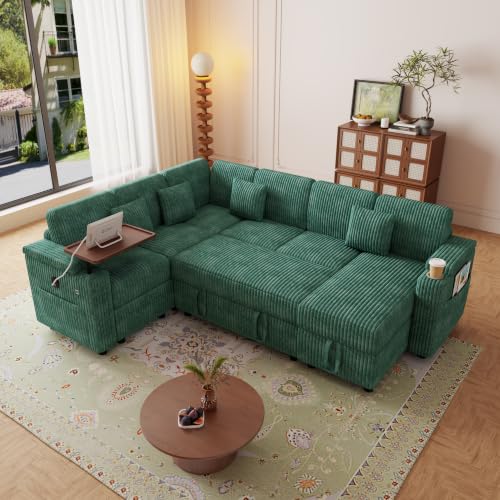
KEIKI 100" U Shaped Convertible Sectional Sofa Bed, Pull-Out Modular Couch with USB Ports, Cup Holder & Table Board, Corduroy 7-Seat Sofa with Storage for Living Room, Entertainment & Guest Use
Check price on Amazon
82" L Shaped Sleeper Sofa Bed, Pull Out Sectional Couch with Storage Chaise/Reclining Backrest, Sectional Couches for Living Room with USB Port, Foldable Table, Cup Holder, Side Pocket, Light Grey
Check price on Amazon
Amsleekey 108" Sectional Sleeper Sofa with Pull Out Bed and Lift Side Table | 6-Zone Storage, 7 Seater Corner Sofa, Modular Couches for Living Room, with Gas-Lift Side Table, Cup Holders, Corduroy Grey
Check price on Amazon
Merax Sleeper Sectional Sofa, 83" L Shaped Couch with Pull Out Bed | Convertible Sofa Bed, Movable Storage Ottoman, Hidden Armrest Storage, Built-In Cup Holders, Foldable Side Table, Brown
Check price on Amazon
VINGLI 4 Pieces Wood Patio Furniture Set Outdoor Sectional, L Shaped Outdoor Couch Outdoor Sectional Furniture with Built-in Side Table for Backyard,Deck,Balcony
Check price on Amazon
ARBORHOME 102.4" Sofa Table with 2 Charging Stations and USB-C Ports & LED | 23"-36.5" Height Adjustable Range for Sectional Sofa, Behind Couch Table with Anti-Bump Pads & LED Light Strip, Walnut Brown
Check price on Amazon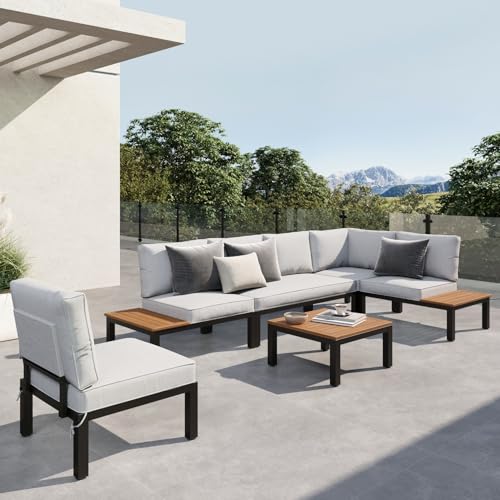
Sophia & William 6-Seat Metal Patio Sofa Sectional Set with Gray Cushions | Modern Patio Conversation Sets 6 Piece Outdoor Modular Couch with Built-in Side Table for Backyard
Check price on Amazon
Huuger 110.2 Inch Behind Couch Table with 2 Power Outlets and USB-C Ports, Extra Long Narrow Sofa Table for Sectional Sofa, Skinny Console Table with Anti-Bump Pads, for Living Room, Rustic Brown
Check price on AmazonFrequently Asked Questions
What is a sectional couch with a built-in table?
It is a multi-piece seating arrangement where a table surface is integrated into the frame or armrest. The table can take the form of a console between seats, a corner table, a drop-down tray, or a table mounted behind the backrest, combining seating and surface area in one footprint.
Does a built-in table reduce seating capacity?
It can, but not always. A central console table typically replaces one seat position, while a rear or side table may be added without reducing seat count. Drop-down trays usually do not affect seating at all. Always confirm the seat count and table configuration on the product specification sheet.
What materials are used for built-in sectional tables?
Common materials include solid wood, engineered wood with veneer, laminate, glass, and metal. Premium and luxury tier sectionals often use solid hardwood or tempered glass, while entry-level models more commonly use laminate or engineered wood. Match the material to your durability expectations and room style.
Is a sectional with a built-in table suitable for small living rooms?
Yes. A built-in table can reduce the need for a separate coffee table or side table, which frees floor space and simplifies traffic flow. In compact rooms, a console table model or drop-down tray version often works especially well because it consolidates furniture into fewer pieces.
How should I care for a built-in table on a sectional?
Wipe the table surface regularly with a soft, damp cloth and avoid abrasive cleaners. For wood or veneer tables, use a coaster under drinks and avoid prolonged moisture exposure. For glass tables, use a non-ammonia glass cleaner. Check the manufacturer care guide for surface-specific recommendations.
Final Thoughts
A sectional couch with a built-in table is a genuinely useful piece of furniture when the configuration matches the room. The feature earns its place by consolidating surface area, reducing clutter, and improving circulation in spaces that cannot afford extra furniture. The key is to choose the format deliberately: a console table for entertaining and storage, a corner table for L-shaped layouts, a rear table for open plans, and a drop-down tray for compact rooms.
Before you buy, measure the full footprint, confirm the seat count, and verify how the table is supported. Then compare materials against how your household actually uses the living room. If you are still refining the room plan, revisit our living room layout guides and couch care hub for supporting advice. With the right configuration, the integrated table becomes an everyday convenience rather than a compromise.
EXPLORE OPTIONS