
Under Couch Guards: The Complete Buying & Setup Guide
Stop losing toys, pet hair, and dust beneath your sofa. Learn how under couch guards work, which materials and tiers suit your home, and how to install them for a cleaner, calmer living room.
Explore Recommended GuardsWhy This Matters: The gap under a sofa is one of the most overlooked zones in the living room. It collects dust, pet hair, crumbs, and stray objects, and it makes routine cleaning harder. An under couch guard closes that gap so the space beneath your sofa stays clean and accessible. This guide walks you through what to look for, how to measure, and how to install a guard without damaging your floors.
What Are Under Couch Guards?
Under couch guards are rigid or semi-rigid barriers that sit beneath the front and side edges of a sofa, closing the vertical gap between the couch frame and the floor. They are sometimes called couch blockers, under-sofa barriers, or furniture gap guards. The goal is simple: prevent small objects, pet hair, dust, and debris from sliding into the dead space under the couch.
Unlike a behind couch blocker, which seals the space between the back of the sofa and the wall, an under couch guard addresses the front and side gaps — the areas you see and interact with every day. Many households use both together for a complete perimeter seal.
Guards are especially useful in homes with pets and young children. A small toy or a clump of pet hair that disappears under the couch is annoying to retrieve and can accumulate for months. A guard keeps that zone clear, which makes vacuuming and dusting faster and more effective. For households already investing in couch covers with recliners on each end or fabric and upholstery protector, a guard is a natural companion piece for keeping the whole sofa clean.
How Under Couch Guards Work
Most guards rely on one of two mechanisms: a rigid panel that stands upright against the couch frame, or a compressible foam strip that wedges between the frame and the floor. Rigid panels are typically made from clear PVC or plastic and slide into the gap; foam guards compress slightly so they stay in place without fasteners.
Some guards are upholstered in fabric that matches or complements the sofa, so they blend in visually rather than reading as a separate accessory. Others use a low-profile design that sits almost flush with the floor. The right mechanism depends on your floor type, the height of the gap, and whether the couch sits on legs or a solid base.
Because the guard closes the gap, air circulation under the couch is reduced. That is a trade-off worth knowing: fewer dust bunnies, but also less airflow. In humid climates, check periodically for moisture buildup and lift the guard during deep cleans. This is similar to the maintenance rhythm you would follow for cushion repair or patching a couch — small, regular checks prevent bigger problems.
Materials and Quality Tiers
Under couch guards fall into three broad quality tiers. Use these descriptors to compare products on a like-for-like basis rather than relying on any single number.
| Tier | Typical Construction | Best For |
|---|---|---|
| Entry-level | Thin plastic panels or low-density foam; basic fit; limited height options | Renters, temporary setups, low-traffic rooms |
| Mid-range | Rigid PVC or denser foam; adjustable height; cleaner edge finish | Most family homes, pet owners, daily-use living rooms |
| Premium | Fabric-wrapped or upholstered panels; custom sizing; reinforced base; non-marking feet | Design-conscious homes, visible gaps, hardwood floors |
Entry-level guards are a solid starting point if you want to test the concept before committing. Mid-range models usually offer a more stable fit and better edge finishing, which matters if the guard is visible. Premium guards are designed to look like part of the sofa — often upholstered to match — and typically include features like adjustable tension or a reinforced bottom edge that resists curling over time.
Across all tiers, look for guards with a soft base or felt pad if you have hardwood, laminate, or luxury vinyl flooring. A hard plastic edge that sits directly on the floor can trap grit and scratch the surface over time. The same principle applies to faux leather accent chairs and other furniture with hard feet — protection at the contact point extends the life of the floor.
Sizing and Measuring Your Couch
Fit is the single biggest factor in whether a guard stays in place. A guard that is too short leaves gaps at the corners; one that is too tall can bow outward or interfere with the couch frame. Measure carefully before ordering.
- Measure the front width. Run a tape along the front edge of the couch from one outer leg to the other. For sectionals, measure each exposed front section separately.
- Measure the gap height. Measure from the floor to the lowest point of the couch frame at the front. Take this measurement at three points — left, center, and right — because frames are rarely perfectly level.
- Add a small margin. Add roughly half an inch to the height so the guard sits slightly compressed against the frame. This keeps it upright without fasteners.
- Check side gaps. If the couch sits away from a wall, measure the side openings too. Some guards are designed as corner pieces for this reason.
- Account for legs. If the couch has exposed legs, the guard must fit between them. Note the spacing between legs so the guard does not overlap the leg bases.
For couches with unusual proportions, a custom-cut guard is often the cleanest solution. This is the same logic behind couch cushion cover replacement — precise measurement prevents a loose, shifting fit. If you are also rearranging the room, our guide to couch setup for a small living room covers how guard placement interacts with tight layouts.
Installation: Step by Step
Most under couch guards install without tools. The process is straightforward, but a few details separate a guard that stays put from one that keeps falling over.
- Clear the space. Vacuum under the couch first. Installing a guard over existing dust and hair traps debris against the barrier.
- Test the fit dry. Slide the guard into place without adhesive or fasteners. Check that it stands upright and that the top edge meets the frame with slight compression.
- Trim if needed. If the guard is slightly too tall, trim from the bottom edge, not the top. The top edge is what contacts the frame.
- Secure the base. If the guard includes adhesive strips or hook-and-loop tabs, apply them to the floor side only after confirming placement. Avoid adhesives on delicate flooring.
- Check the perimeter. Walk around the couch and confirm there are no visible gaps at the corners or sides. Add corner pieces if needed.
- Test with the couch in use. Sit down, recline if applicable, and check that the guard does not shift or interfere with the mechanism.
If your couch has a reclining mechanism, verify that the guard sits behind the extension path before use. A guard that blocks the footrest can damage the mechanism. For power recliners, the same caution applies — see our notes on power reclining loveseats for how the mechanism travels.
Maintenance and Long-Term Care
Under couch guards are low-maintenance, but they are not maintenance-free. Dust accumulates on the face of the guard, and debris can collect at the base. A quick routine keeps the guard effective and extends its lifespan.
- Wipe plastic and PVC guards with a damp cloth every two to four weeks.
- Vacuum the base of foam guards with a brush attachment to remove trapped hair.
- Lift removable guards during deep cleans to check for moisture or pest activity.
- Inspect the bottom edge for grit that could scratch flooring; clean or replace the pad if worn.
- Re-seat the guard if it starts to bow or lean after several months of use.
Fabric-wrapped guards should be spot-cleaned with a mild upholstery cleaner. Avoid soaking the fabric, since moisture trapped against the couch frame can encourage mildew. If the guard becomes damaged, small repairs are often possible — the same approach used for patching a leather couch applies to fabric-wrapped panels.
Who Should Consider an Under Couch Guard?
An under couch guard is a practical addition for several types of households:
- Pet owners dealing with hair, dander, and toys that disappear under the sofa.
- Families with young children where small toys and snacks end up in the gap.
- Allergy sufferers who want to reduce dust accumulation in hard-to-reach zones.
- Renters who want a removable, non-permanent solution.
- Anyone with a low-clearance sofa where cleaning tools cannot easily reach.
If your couch sits on tall legs with a wide gap, a guard is optional — you can vacuum underneath directly. The guard becomes more valuable as the gap narrows and access becomes harder. Households that already use a behind couch blocker will find that pairing the two creates a full perimeter seal.
Common Mistakes to Avoid
- Buying before measuring. Width and height both matter; a guard that does not match the gap will not stay upright.
- Ignoring the floor type. Hard bases on delicate floors can cause scratches over time.
- Blocking a recliner. Always confirm the guard sits outside the mechanism's travel path.
- Skipping the pre-install vacuum. Trapping debris against the guard defeats the purpose.
- Over-tightening. A guard should sit with slight compression, not be forced into the gap.
Recommended Under Couch Guards
⚠️ AFFILIATE DISCLOSURE: This website contains affiliate links. As an affiliate Associate, we earn from qualifying purchases. If you make a purchase through these links, we may receive a small commission at no additional cost to you. Read our full affiliate policy.

12 Pcs Under Couch Blocker for Bed Adjustable Furniture Plastic | Under Bed Blocker with 30 Ties Black Couch Barriers for Dogs Pets Cats (Style 1)
Check price on Amazon
RowinsyDD Under Couch Blocker, Couch Blockers for Pets, 16 Pack | Clear Under Furniture Blocker,Stop Things Going Under Sofa,Toy Blockers for Under Furniture with Strong Tape,16" L x 1.6" H
Check price on Amazon
RowinsyDD Under Couch Blocker, Couch Blockers for Pets, 8 Pack | Clear Under Furniture Blocker,Stop Things Going Under Sofa,Toy Blockers for Under Furniture with Strong Tape,16" L x 1.6" H
Check price on Amazon
2 Pack Under Couch Blocker, 3 x 132 in Adjustable Sofa Gap Guard, Couch Blockers for Pets and Toys, No Tools Required, Easy to Install, Helps Keep Toys and Everyday Items from Sliding Under Furniture
Check price on Amazon
Buoydas Under Couch Blocker for Kids and Pet Toys, 3" H x 132" L-1 Pc | Toy & Gap Blocker, For Sofa, Bed & Furniture, Prevents Toys, Small Items & Dust from Sliding Underneath
Check price on Amazon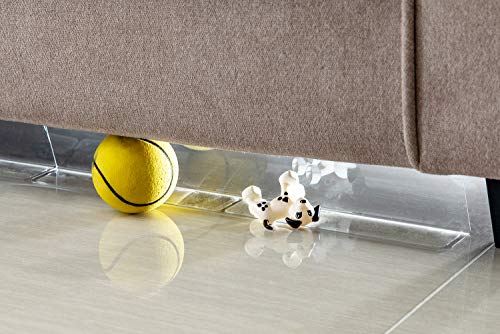
BOWERBIRD Clear Under Couch Blockers - Stop Toys from Going Under Couch Sofa Bed and Other Furniture - Suit for Hard Surface Floors Only
Check price on AmazonBuyer's Checklist
Before you order, run through this quick checklist to confirm you are getting the right guard for your space.
- Front width measured at the couch frame, not the cushion edge.
- Gap height measured at three points along the front.
- Side gaps measured if the couch is freestanding.
- Leg spacing noted if the couch has exposed legs.
- Floor type identified — hardwood, laminate, vinyl, or carpet.
- Recliner travel path checked, if applicable.
- Material tier selected based on visibility and traffic.
- Maintenance routine planned — wipe-down or vacuum cadence.
Frequently Asked Questions
What are under couch guards and what do they do?
Under couch guards are barriers placed beneath the front and sides of a sofa to close the gap between the frame and the floor. They prevent toys, pet hair, dust, food crumbs, and small objects from sliding underneath the couch, making cleaning easier and keeping the space beneath the sofa tidy.
What materials are under couch guards made from?
Most under couch guards use one of three materials: clear PVC or rigid plastic, dense foam, or upholstered fabric wrapped around a rigid core. Plastic guards are easy to wipe clean, foam guards compress against the floor for a tight seal, and fabric-wrapped guards blend visually with the sofa upholstery.
How do I measure for an under couch guard?
Measure the width of the couch along its front edge, then measure the height from the floor to the bottom of the couch frame. Add a small margin to the height so the guard sits slightly compressed. For L-shaped or sectional sofas, measure each exposed front section separately.
Will an under couch guard damage my floors?
No, when installed correctly. Choose guards with a soft felt or rubber base, avoid dragging the couch across the floor during installation, and check the guard periodically for trapped grit. On delicate hardwood or luxury vinyl, use a guard with a non-marking foot.
Can under couch guards be used with reclining sofas?
Yes, but only guards that sit behind the reclining footrest mechanism or that are designed to flex. Do not block the recliner's extension path. Check that the guard does not interfere with the mechanism's travel before use.
How often should I clean an under couch guard?
Wipe plastic and PVC guards every two to four weeks. Vacuum foam guards with a brush attachment on the same cadence. Lift removable guards during seasonal deep cleans to check for moisture or trapped debris.
Do I need an under couch guard if I have a robot vacuum?
A robot vacuum helps, but most models cannot fully clear the tight gap under a low-clearance sofa. A guard stops debris from entering the gap in the first place, which reduces how often the robot vacuum needs to work in that zone. The two work well together.
Can I use an under couch guard with a sleeper sofa?
Yes, but check that the guard does not interfere with the pull-out mechanism. Guards that sit at the front edge of a sleeper sofa should be removable or positioned so the bed can extend without obstruction. Test the mechanism after installation.
Final Thoughts
An under couch guard is a small addition with an outsized effect on daily living. It keeps the space beneath your sofa clean, reduces how often you need to retrieve lost items, and makes routine vacuuming faster. The key is to measure carefully, choose a tier that matches the visibility of the gap, and install with attention to the floor and any reclining mechanism.
If you are also addressing the back of the sofa, pair this guide with our behind couch blocker resource for a complete perimeter solution. And if your couch is due for a refresh, explore reupholstering a couch or cushion cover replacement to extend its life alongside your new guard.