
Contemporary Sectional Living Room Furniture
A complete research guide to modern sectional seating — how to plan the layout, compare materials, judge construction quality, and style a contemporary living room that works for real life.
Start the GuideWho this guide is for: You already know you want a contemporary sectional for your living room. You are now comparing shapes, upholstery types, and construction quality before committing. This guide walks you through each decision in order, from room planning to the final styling layer.
What Makes a Sectional Contemporary
Contemporary is often confused with "modern," but the two describe different things. Modern refers to a historical design movement defined by strict geometry and minimal ornamentation. Contemporary describes furniture designed for how people live now: cleaner silhouettes than traditional furniture, but with comfort engineering and practical features built in. A contemporary sectional typically shows several of these traits at once.
Low, Clean Silhouette
Track arms or gently tapered arms, straight backs, and a low visual profile that keeps sightlines open across the room.
Exposed or Hidden Base
Either slim metal legs for an airy look or a fully upholstered base for a grounded, architectural feel — both are valid contemporary choices.
Neutral, Layered Upholstery
Tonal palettes, tight tailoring, and restrained pattern use let texture and form carry the design instead of heavy ornament.
Modular Thinking
Reconfigurable pieces, reversible chaise sections, and add-on modules that adapt when your room or household changes.
The practical benefit of a contemporary sectional is that it solves two problems at once. It provides generous seating for a family or for entertaining, and it anchors the room visually without the visual weight of a traditional rolled-arm sofa plus separate chairs. That combination is why sectionals remain one of the most requested living room furniture categories. If you want to compare the broader category first, our overview of a comfortable sectional couch covers the fundamentals of comfort and sizing.
Sectional Shapes and Configurations
The shape you choose determines how the room flows. Before comparing upholstery, decide which footprint fits your walls, doorways, and traffic paths.
L-Shaped Sectional
The most common contemporary configuration. One long run along a wall or floating in the room, with a shorter return forming the "L." It works well when you have one dominant wall and an open area to one side. The chaise end is usually placed away from the main walkway so people can enter the seating area easily.
U-Shaped Sectional
A U-shape creates a conversation enclosure and is ideal for large open-plan rooms where you need to define a seating zone without building walls. It requires more floor area and at least one open side for access. In very open living spaces, a U-shaped arrangement often pairs well with a console placed behind the sofa, which we cover in our guide to a console behind the couch.
Corner Sectional
A dedicated corner unit hugs two walls and is efficient in rooms with an awkward corner. It suits rectangular rooms where you want maximum seating with a compact footprint. For a deeper comparison of corner layouts, see our article on the corner sectional couch.
Modular Sectional
Individual modules that connect with brackets or rest against each other. Modular designs are the most future-proof contemporary choice because you can add, remove, or rearrange pieces. They also make moving easier, since each module fits through a standard doorway.
Sectional with Recliners
Contemporary styling has caught up with reclining mechanisms. Modern recliner sectionals use wall-hugging or zero-wall mechanisms and look like clean-lined sofas until you activate them. If powered recline is a priority, review our guide to comfortable sectionals with recliners for mechanism and clearance considerations.
Measure before you fall in love: Record the length of each wall, the width of every doorway the sectional must pass through, and the distance from the wall to the nearest traffic path. A sectional that fits the wall but blocks a doorway is the single most common buying regret in this category.
Planning the Layout Around Your Sectional
A contemporary sectional is a large visual anchor. The rest of the room should respond to it rather than compete with it. Work through these layout decisions in order.
Establish the Focal Point First
Decide what the seating faces: a fireplace, a television, a window with a view, or simply the center of the conversation area. The sectional's long side usually runs parallel to that focal point. In an open floor plan, the back of the sectional can also act as a soft room divider.
Respect Walkway Width
Leave a clear path of roughly 36 inches (about 90 cm) along main traffic routes, and at least 18 inches between the sectional and a coffee table for legroom. Tightening these dimensions is the fastest way to make a room feel cramped, no matter how good the furniture looks.
Float or Anchor
Pushing a sectional against the wall saves space, but floating it slightly off the wall — even 6 to 12 inches — can improve the sense of depth in a narrow room. In larger rooms, floating the sectional to define a seating zone is often the better choice.
Balance with Secondary Seating
An L-shaped sectional plus one or two accent chairs gives you flexible seating without clutter. If the room is compact, consider pairing a smaller sectional with a single accent chair rather than adding a loveseat. Our guide to a couch and chair for small living room arrangements explains how to balance the two.
Lighting and Outlets
Plan floor lamps, side tables, and charging points before delivery. A sectional often covers wall outlets, so map their locations early. If the sectional will include a powered recliner or USB charging, confirm the outlet position and cord routing in advance.
For rooms with limited square footage, our detailed guide to comfortable living room furniture for small spaces expands on these layout principles with compact alternatives.
Upholstery Materials and Performance
Contemporary design leans on texture rather than pattern, so the upholstery material carries a lot of the visual weight. It also determines how the sectional holds up to daily use. Compare the main options below.
| Material | Best For | Care & Durability Notes |
|---|---|---|
| Performance fabric (woven synthetics) | Households with kids or pets; high-traffic living rooms | Stain-resistant and often cleanable with water; look for tight weaves and removable covers |
| Textured weave (bouclé, chenille) | Warm contemporary looks; low-to-medium traffic | Soft hand-feel; bouclé can snag, so keep pet claws trimmed and vacuum gently |
| Velvet | Statement contemporary rooms; evening entertaining | Rich depth of color; requires brushing and careful stain treatment; choose performance velvet for daily use |
| Leather (top-grain) | Long-term daily use; a tailored, architectural look | Wipes clean easily and develops patina; pair with a conditioning routine; see our comfortable leather sectional couches guide |
| Cotton and linen blends | Breathable, relaxed contemporary interiors | Natural fibers show wear sooner; best for adults-only or lower-traffic rooms |
Choosing the Right Fabric for Your Household
Performance fabrics have narrowed the gap between durability and design. A mid-range performance weave can now look as refined as a premium natural fiber while resisting spills far better. If children or pets share the room, prioritize cleanability and tight weave construction over hand-feel. If the sectional is primarily for adults and the room is not a primary play space, a textured weave or velvet is a reasonable choice.
Color matters as much as fiber. Mid-tone neutrals — warm gray, greige, taupe, soft olive — hide everyday marks better than pure white or very dark shades, and they keep a contemporary room from feeling cold.
Frame, Cushion, and Construction Quality
Two sectionals can look identical in a showroom and behave very differently after three years. Construction is where that difference lives.
Frame
Look for kiln-dried hardwood or high-grade engineered wood frames with corner blocks, dowels, and screws rather than staples alone. A solid build resists the twisting and sagging that affects sectionals because their longer spans put more stress on the frame than a standard sofa.
Suspension
Sinuous wire (zig-zag springs) is common in mid-range pieces and performs well when the gauge is appropriate. Pocketed coils or eight-way hand-tied springs indicate higher-tier construction and provide more even support over a longer lifespan. Ask specifically about suspension when comparing models.
Cushion Fill
High-resilience foam is the standard. Foam wrapped in fiber or down gives a softer initial feel but requires fluffing. Down-wrapped foam cores are a common high-end tier solution: the support of foam with the softness of down. Removable, zippered cushion covers make maintenance far easier and are a strong signal of thoughtful construction.
Joinery and Modular Hardware
On modular sectionals, check the connectors between modules. Metal brackets with locking pins are more durable than hook-and-loop or strap systems, especially in households where the sectional gets rearranged often.
Questions worth asking a seller: What is the frame material and joinery? What type of suspension is used? Are the cushion covers removable and washable? What is the weight capacity per seat? A seller who can answer these clearly is usually selling a better-built product.
Quality Tiers Explained
Because contemporary sectionals vary enormously in build quality, it helps to think in tiers rather than individual models. The tiers below describe relative market positioning and construction, not any specific number.
| Tier | Typical Construction | Best For |
|---|---|---|
| Entry-level | Engineered wood frame, sinuous wire suspension, standard foam cushions, fixed covers | Guest rooms, first apartments, temporary setups, lower-traffic spaces |
| Mid-range | Kiln-dried hardwood frame, upgraded sinuous or pocket coil suspension, HR foam with fiber wrap, some removable covers | Primary family living rooms; the most balanced tier for daily use |
| Premium | Solid hardwood frame with reinforced joinery, pocketed coil suspension, down-wrapped foam, fully removable covers, performance upholstery | High-traffic homes, long-term ownership, design-forward interiors |
| Luxury | Eight-way hand-tied suspension, bench-made frames, premium leather or designer performance fabric, custom configuration | Custom layouts, formal living rooms, buyers prioritizing craftsmanship |
A practical rule: mid-range models usually offer the smoothest reclining mechanisms and the most consistent cushion support relative to entry-level construction, while premium and luxury tiers add longevity and refinement rather than dramatically different comfort. If you are furnishing a full room rather than a single piece, our guide to contemporary living room furniture sets explains how to coordinate tiers across a matching set.
Styling a Contemporary Sectional
Contemporary styling is about restraint and contrast. The sectional provides the mass and the neutral field; the styling layer provides texture, color, and personality.
Pillows and Throws
Use an odd number of pillows — three to five on a typical L-shaped sectional — in two or three coordinated colors. Mix one smooth fabric with one textured fabric (bouclé with velvet, for example) to add depth without pattern noise. A single folded throw draped over one arm is enough; more than that starts to look untidy.
Rugs
Anchor the seating area with a rug large enough that the front legs of the sectional sit on it. A flat-weave or low-pile rug keeps the contemporary look clean, while a subtly textured rug adds warmth underfoot.
Coffee and Side Tables
Choose one sculptural coffee table rather than a matching set. Round or organic shapes soften the sectional's straight lines. Side tables should be tall enough to reach from the seat height and small enough not to crowd the walkway.
Lighting and Art
Layer lighting with a floor lamp beside the sectional and a table lamp on a console. On the wall behind the sectional, a large single piece of art or a tight grid of smaller frames keeps the composition calm.
For a more relaxed, family-oriented contemporary look, our article on a comfy sectional couch discusses how softer textiles and deeper seats change the styling direction.
Ready to Compare Contemporary Sectionals?
The product section below shows current contemporary sectional options. Use it to compare configurations, upholstery types, and construction details against the checklist in this guide.
Browse Recommended OptionsRoom-by-Room Recommendations
Small Living Rooms
Choose a compact L-shaped sectional or a modular two-piece set with a reversible chaise. Avoid deep seats and oversized armrests, which consume floor space without adding seating. A light neutral upholstery color helps a small room feel larger. For more compact layouts, see our guide to a comfy couch for a small living room.
Open-Plan Spaces
Use a U-shaped or large modular sectional to define the seating zone, and place a console or low shelf behind it to create a visual boundary. Keep the back of the sectional facing the dining or kitchen area so the seating faces the focal point.
Family Rooms
Prioritize performance fabric, removable covers, and a mid-range or premium frame. A sectional with a chaise is more practical than a recliner-only design for shared lounging, and modular pieces make it easier to clean underneath.
Formal Living Rooms
A sleek leather or velvet sectional in a deeper tone creates a polished contemporary look. Keep accessories minimal and invest in the premium tier for a tailored silhouette that holds its shape.
Multi-Purpose Rooms
If the living room doubles as a guest room, a sectional with a sleeper function is the practical answer. Our guides to a comfortable couch to sleep on and to comfortable pull-out couches cover mattress types and mechanism choices.
Buying Checklist and Common Mistakes
Pre-Purchase Checklist
- Measure the wall run, doorway widths, and turning radius for delivery.
- Confirm the configuration: left-facing or right-facing chaise, number of modules, and connector type.
- Verify the frame material, suspension type, and cushion fill.
- Check whether cushion covers are removable and washable.
- Confirm fabric performance ratings and cleaning instructions.
- Plan outlet access for powered recliners or charging ports.
- Ask about the delivery path and whether assembly is included.
Common Mistakes to Avoid
- Buying for the wall instead of the room. A sectional that fits perfectly against one wall can still block traffic flow or crowd a doorway.
- Choosing upholstery by look alone. A beautiful textured fabric may not suit a household with young children or pets.
- Ignoring the chaise direction. A chaise on the wrong side can make an otherwise good layout awkward; confirm the facing before ordering.
- Skipping the suspension question. This is where entry-level and mid-range sectionals differ most in long-term comfort.
- Over-accessorizing. Contemporary styling works best when the sectional has room to breathe.
If you want to compare a wider range of comfortable seating before finalizing, our collection of comfortable couches for small spaces and our guide to a comfy sectional couch for small spaces offer additional configuration ideas.
Frequently Asked Questions
How do I know if a sectional will fit through my door?
Measure the narrowest doorway along the delivery path, then compare it with the depth of the sectional's largest module or the overall depth of a one-piece unit. Modular sectionals are easier to deliver because each piece is smaller. If the doorway is tight, ask the seller about disassembly options.
Is a left-facing or right-facing chaise better?
Stand facing the sectional as it will sit in the room. If the chaise is on your left, it is a left-facing chaise. Choose the direction that keeps the chaise away from the main walkway and toward the more open side of the room. There is no universally better side — it depends entirely on your layout.
What is the most durable upholstery for a family sectional?
Tight-weave performance fabric and top-grain leather are the two most durable everyday choices. Performance fabric handles spills and stains more easily, while leather wipes clean and resists wear. Both are available across mid-range and premium tiers.
How much space should I leave around a sectional?
Allow about 36 inches for main walkways and at least 18 inches between the sectional and the coffee table. Leave a few inches of clearance behind the sectional for ventilation and cleaning access, unless the design is specifically meant to sit flush against a wall.
Are modular sectionals worth considering over fixed designs?
Modular designs are generally more flexible for future room changes and easier to deliver. Fixed designs can feel more solid and are often available in more tailored silhouettes. If you expect to move or rearrange the room, modular is the safer long-term investment.
How do I style a sectional without making the room feel cluttered?
Keep the palette tonal, limit pillows to three to five, and use one large rug and one sculptural coffee table rather than many small pieces. Let the sectional be the dominant visual element and keep accessories to a curated minimum.
Recommended Contemporary Sectional Living Room Furniture
⚠️ AFFILIATE DISCLOSURE: This website contains affiliate links. As an affiliate Associate, we earn from qualifying purchases. If you make a purchase through these links, we may receive a small commission at no additional cost to you. Read our full affiliate policy.

Anthato 3PCS Living Room Furniture Set, Contemporary Sectional Sofa Couches, Cream White Sofa Set with Metal Feet, Premium Faux Leather Loveseat & 2 Chairs for Home/Office/Club, 2+1+1, Cream White
Check price on Amazon
COSYMOOR Contemporary Living Room Furniture Set, Faux Leather Sectional Sofa Set, 3-Piece Couch Set for Living Room/House/Bedroom/Office/Apartment,Brown
Check price on Amazon
COSYMOOR Contemporary Living Room Furniture Set, Faux Leather Sectional Sofa Set, 3-Piece Couch Set for Living Room/House/Bedroom/Office/Apartment,Cream White
Check price on Amazon
Brown Leather 3-Piece Sofa Set with USB & Type-C, Living Room Couch | TYBOATLE Sectional Couches, Comfy 3-Piece Living Room Furniture with Charging Ports, RV Office Apartment Bedroom, Brown
Check price on Amazon
Valencia Pista Geniune Leather Reclining Sectional Sofa with Right Hand Chaise -| Power Recliner Chair, Nappa 11000 Leather | L Shaped Couch for Living Room Furniture, Cloudy Grey
Check price on Amazon
Marsail 110" Modular Sectional Sleeper Sofa, Pull Out Sofa Bed with Storage | 7 Seat Comfy Cloud Sofas for Living Room, Chenille Sectional Couches with USB Ports & Cup Holders, Dark Gray
Check price on Amazon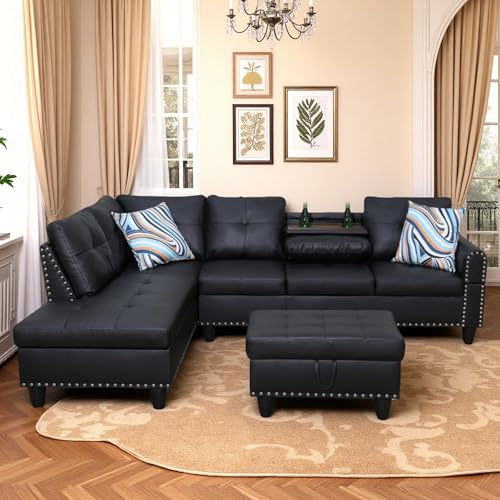
Trygoal Leather 3-Piece L-Shaped Couches for Living Room, Sectional Sofa with Storage Ottoman & Movable Chaise, Modular Convertible Couch for Bedroom & Apartment, Midnight Black
Check price on Amazon